
Juan Nutrisyon
Nature's Hidden Pantry: Discovering the Forgotten Superfoods of the Philippines
While most of us look to supermarket shelves for our next meal, a vibrant, nutrient-dense pantry is waiting just outside our doors. From the coastal coves to the mountain trails, the Philippines is home to foraged foods that have sustained our ancestors for generations. At Juan Nutrisyon, we believe these native foods are the key to a sustainable and healthy future. It's time to look past the "imported" labels and rediscover the power of what grows wild and free in our own backyard.
The Beauty of the Wild
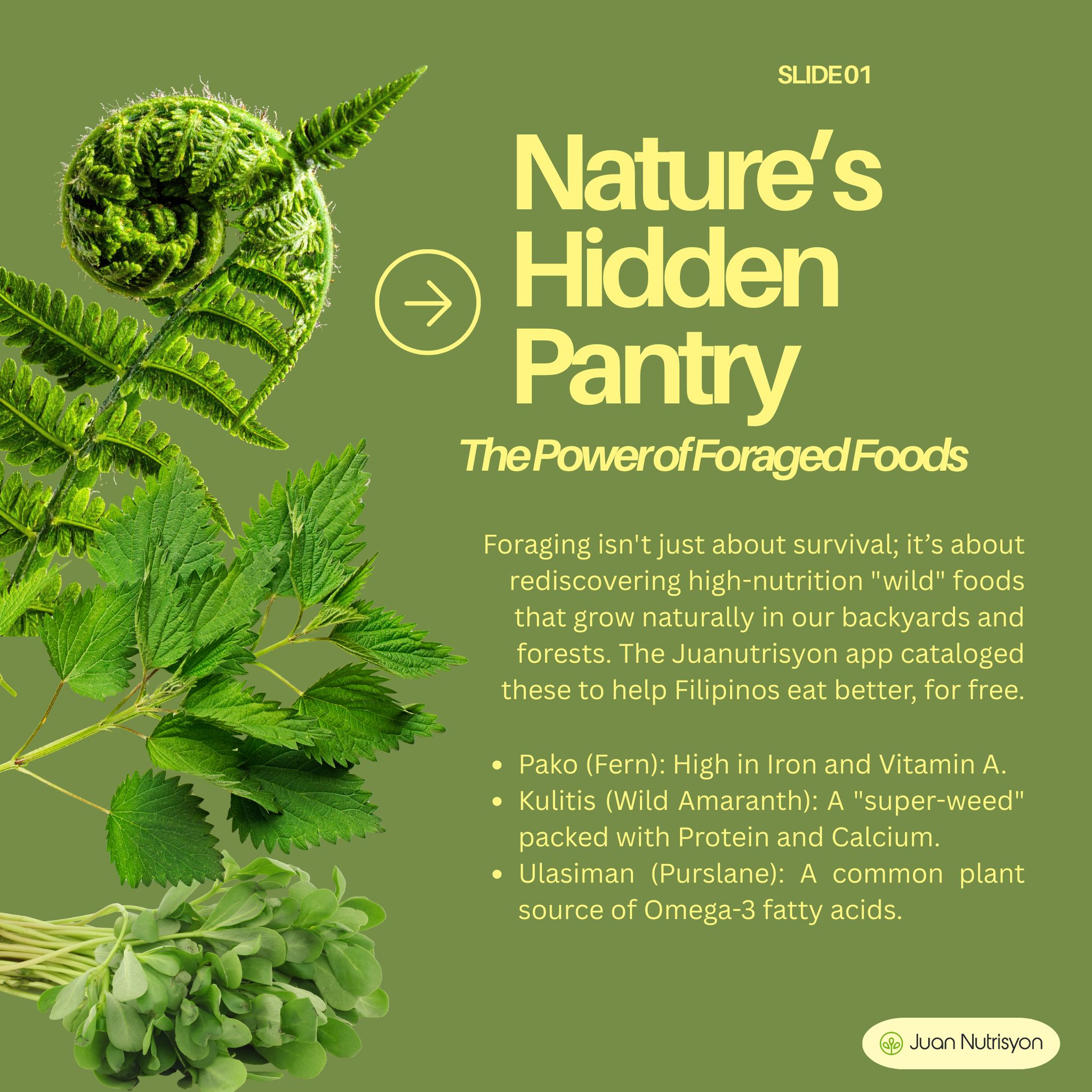
Foraging isn't just about survival; it's about reconnecting with the land. Native plants often require no pesticides, no chemical fertilizers, and very little water compared to commercial crops. They are the ultimate "slow food."
Cultural Heritage: Many of these plants are known by different names across our 7,107 islands. What might be a "weed" in one province is a prized delicacy in another. By documenting these, we preserve the culinary identity of our various regions.
Spotlighting the Harvest
One of the most exciting aspects of foraged food is the nutritional density. Wild plants often contain higher concentrations of antioxidants and minerals than their farmed counterparts because they have to be "tougher" to survive in the wild.
Take, for example, our native berries and leafy greens. Unlike store-bought lettuce, which is mostly water, native greens like talinum, pako (fern), or kulitis (native amaranth) are packed with iron, calcium, and Vitamin C. These are foods that don't just fill your stomach - they fuel your recovery and boost your immune system.
Safe Foraging & Sustainability
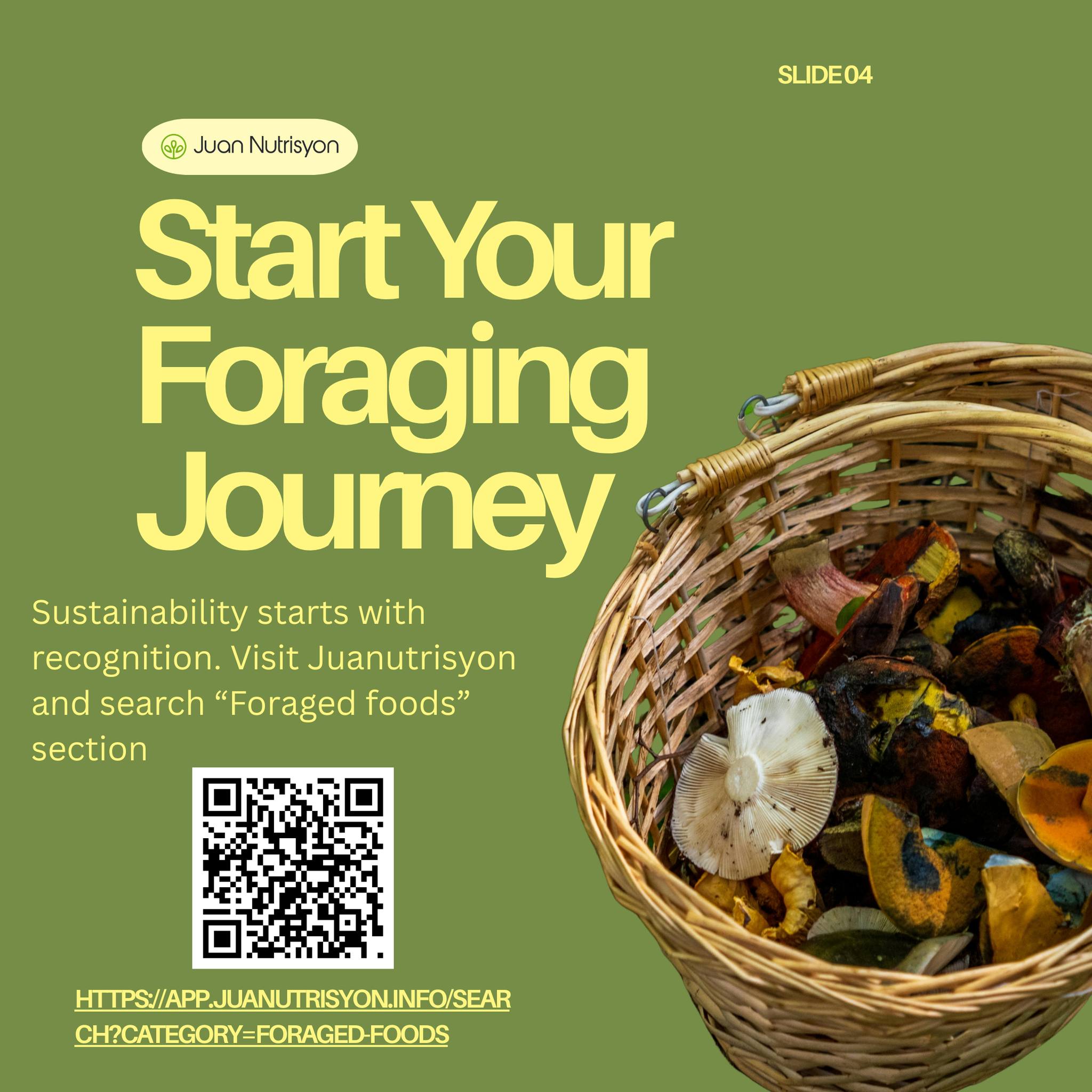
Before you head out into the wild, remember the golden rule of foraging: If you aren't 100% sure what it is, don't eat it.
- Know Your Sources: Ensure you aren't foraging near busy roadsides or areas sprayed with chemicals.
- Take Only What You Need: Sustainable foraging means leaving enough for the plant to regrow and for the local wildlife to thrive.
- Wash Thoroughly: Just like store-bought produce, foraged items need a good soak and scrub to remove wild soil and tiny "residents."
Deep Dive: Why Go Native?
Climate Resilience
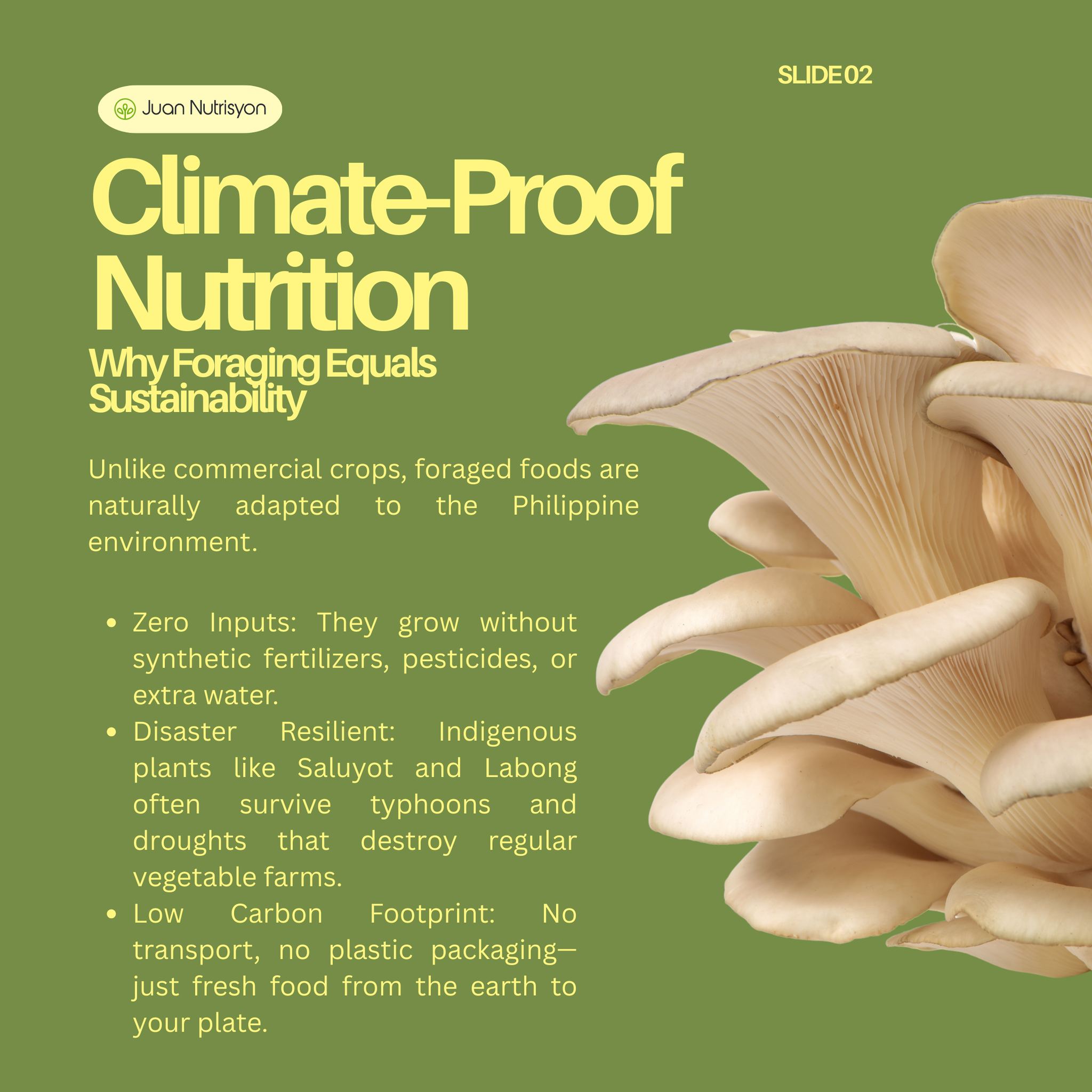
Native plants are naturally adapted to the Philippine climate. They can withstand our typhoons and our dry seasons far better than introduced species. Promoting these foods is a step toward a more climate-resilient food system.
Economic Empowerment
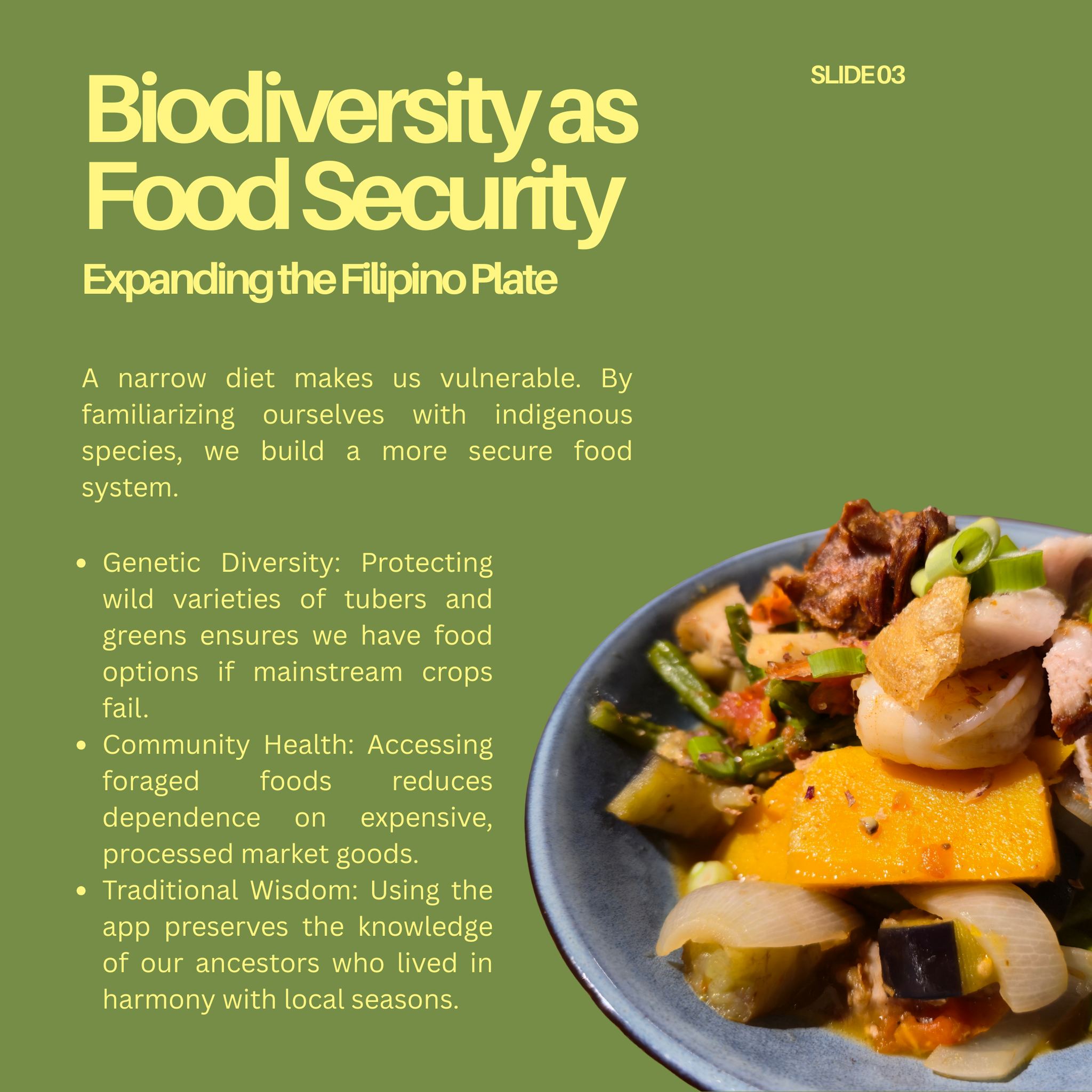
By creating a demand for native and foraged foods, we support local communities and indigenous groups who have the knowledge to harvest these items. It keeps the "Juan Nutrisyon" philosophy alive - nutrition for the people, by the people.
Flavor Profile
Wild foods offer unique flavor profiles - bitter, sour, and earthy - that you simply can't find in a supermarket. These flavors are often indicators of high phytonutrient content.
The next time you take a walk through your community, keep your eyes open. You might just find a superfood hiding in plain sight. Let's bring these native treasures back to the Filipino dinner table.
Check out the foraged foods section on our website
View foraged foods